
Why Austin’s Extended Outdoor Season Demands Better Shade
Your backyard in Mueller doesn’t get a break from the sun. With 228 clear days annually (Source: National Weather Service Austin/San Antonio, 2023) and summer temperatures averaging 96°F from June through August, standard patio umbrellas and fixed awnings simply can’t keep up. Austin homeowners face a unique challenge: you want to maximize your outdoor living space during our nearly year-round outdoor season, but the intense Central Texas sun makes unshaded patios unusable by mid-morning.
Shade sails in Austin offer what traditional shade structures cannot—breathable, wind-resistant coverage that reduces surface temperatures by up to 20°F beneath the fabric (Source: U.S. Department of Energy, Building Technologies Office, 2022). Unlike solid pergola covers that trap heat, properly tensioned shade sails allow hot air to escape while blocking 90-98% of harmful UV rays. For East Austin’s eclectic mix of renovated bungalows and modern new builds, this flexibility matters.
The Wind Factor Most Installers Ignore
Austin Energy reports that our region experiences sustained winds of 10-15 mph on average, with gusts exceeding 30 mph during spring and fall fronts. Cheap shade sails from big-box stores aren’t engineered for these conditions. Professional shade sails installation in Austin requires 316-grade marine stainless steel hardware, commercial-grade HDPE fabric rated for 90+ mph wind loads, and anchor points calculated for your specific exposure. The shade sail flapping in your neighbor’s yard after every storm? That’s a $200 impulse buy, not an engineered shade system.
Architectural Shade Sails for Contemporary Austin Homes
Walk through the Domain area on any weekend and you’ll notice how modern architecture dominates—clean lines, expansive glass, minimalist outdoor spaces. Traditional pergolas and ornate awnings clash with this aesthetic. Architectural shade sails TX installations complement contemporary design because they function as sculptural elements, not afterthoughts.
Design Integration for Modern Properties
The geometric tension of a properly designed shade sail system creates visual interest while solving a functional problem. For your contemporary Austin home, consider these design approaches:
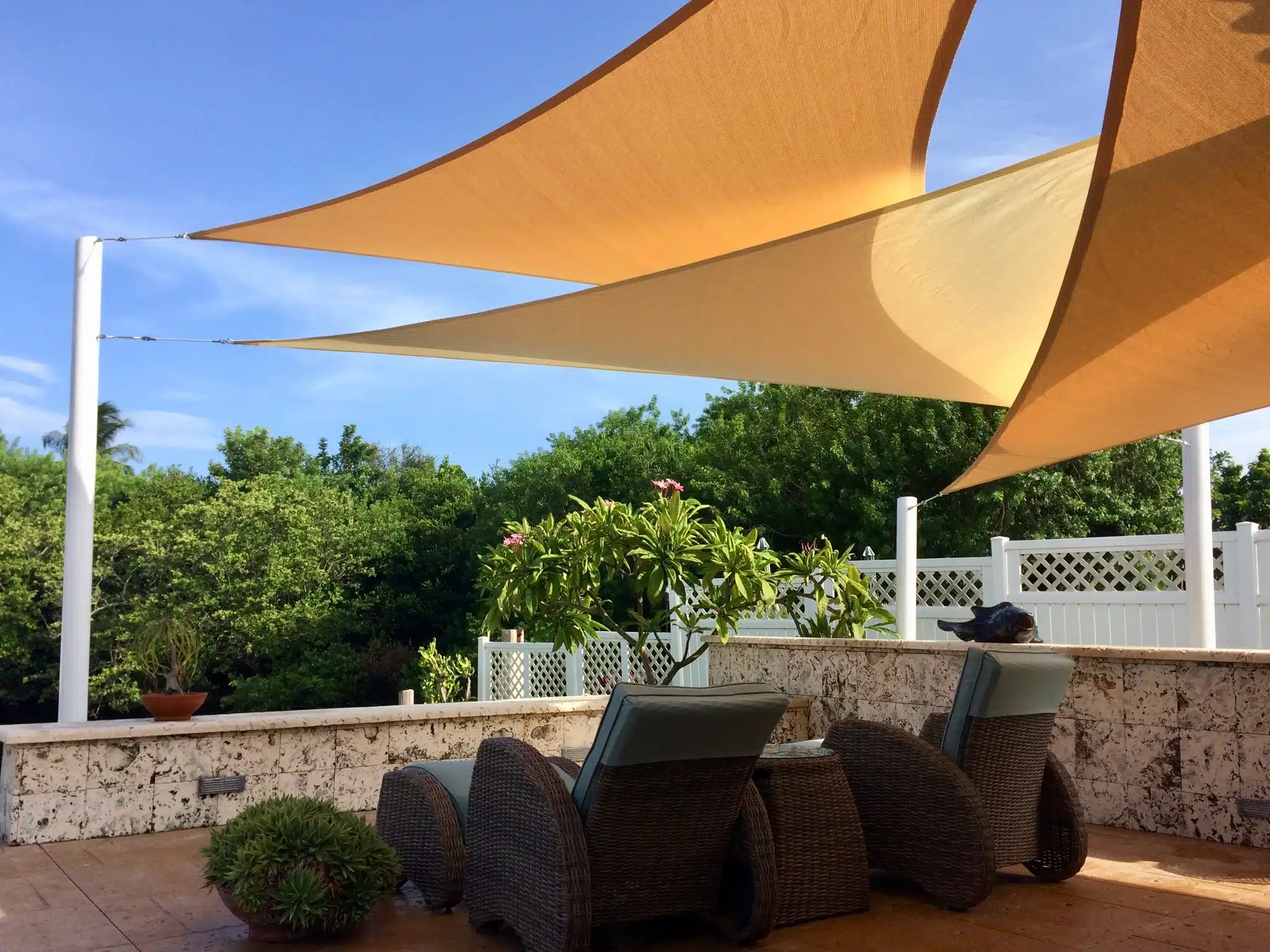
- Overlapping triangles create dynamic shadows that shift throughout the day
- Cantilevered configurations extend coverage beyond your patio footprint without cluttering sight lines
- Color-matched fabrics coordinate with your home’s exterior palette (240+ commercial colors available)
- Integrated lighting mounts allow for evening entertaining without additional structures
A recent installation near Mueller Lake Park used three overlapping ivory sails to shade a 400-square-foot entertainment deck. The homeowners reported their deck surface temperature dropped from 142°F to 98°F in direct afternoon sun—making the space usable from 11am onward instead of only after sunset.
HOA Community Pool Applications
Austin’s HOA community pools face strict liability requirements for sun protection. The American Academy of Dermatology recommends shade structures over all pool deck seating areas, yet many communities rely on dated metal pavilions that rust, collect debris, and block breezes. Commercial-grade shade sails provide:
- UV protection meeting ASTM standards (blocks 96% of UVA/UVB rays)
- Open-weave design that allows rain to pass through, preventing pooling
- 15-year fabric warranties versus 3-5 years for typical awning materials
- Easier permitting than permanent structures in most Austin jurisdictions
Backyard Shade Sails Austin: What Your Investment Covers
When you request a custom shade sail design consultation, you’re not just buying fabric and poles. Professional installation in Austin includes site-specific engineering that accounts for your soil composition (Austin’s clay-heavy soil requires different anchor depths than sandy soils), prevailing wind direction, and existing structures.
Component Breakdown and Quality Indicators
| Component | Budget Grade | Professional Grade |
|---|---|---|
| Fabric | Polyester, 3-year warranty | Commercial HDPE, 15-year warranty |
| Hardware | Zinc-plated steel | 316 marine stainless steel |
| Posts | 4×4 pressure-treated wood | 6″ steel with powder coating |
| Anchors | Concrete blocks | Engineered helical piers or cast footings |
| Wind Rating | 45 mph (remove before storms) | 90+ mph (permanent installation) |
The price difference between budget and professional installations typically ranges from $15-25 per square foot to $35-55 per square foot (Source: HomeAdvisor National Cost Guide, 2024). However, when you factor in replacement costs and the labor of repeatedly removing and reinstalling budget sails before Austin’s frequent wind events, professional-grade systems deliver better lifetime value.
Installation Timeline and Process
Unlike pergola construction that can disrupt your yard for weeks, most residential shade sail installations complete in 2-3 days. The process follows this sequence:
- Day 1: Post installation and concrete curing (if applicable)
- Day 2: Hardware mounting and initial fabric tensioning
- Day 3: Final tension adjustments and client walkthrough
For existing structures with adequate anchor points—such as steel-framed patios common in East Austin’s newer construction—installation often completes in a single day.
Energy Savings and Austin Energy Rebate Considerations
Your shade sail investment connects directly to your energy costs. Austin Energy’s residential rates averaged $0.118 per kWh in 2024 (Source: Austin Energy Rate Schedule, 2024), and cooling accounts for roughly 27% of Texas household energy consumption during summer months (Source: U.S. Energy Information Administration, 2023). By shading windows and outdoor HVAC condensers, properly positioned shade sails can reduce your cooling load significantly.
Strategic Placement Tip: Position shade sails to cover west-facing windows and your outdoor AC unit between 2pm-6pm. This is when Austin’s solar heat gain peaks and your cooling system works hardest. Shading your condenser alone can improve its efficiency by 10% (Source: U.S. Department of Energy, Energy Saver Guide, 2023).
While Austin Energy doesn’t currently offer direct rebates for shade structures, the utility’s Home Performance with ENERGY STAR program provides rebates up to $1,450 for comprehensive efficiency improvements. A shade sail installation documented as part of a whole-home efficiency upgrade may qualify your project for additional incentives when combined with other improvements.
Choosing Sun Shade Sails Installation Austin: What to Verify
The shade sail market in Austin lacks the regulatory oversight of roofing or electrical work, which means quality varies dramatically between installers. Before committing to any provider, verify these credentials:
Essential Contractor Qualifications
- Texas contractor registration current and verifiable through TDLR
- General liability insurance minimum $1 million (request certificate)
- Manufacturer certification from the fabric brand they install
- Portfolio of Austin installations you can physically visit
- Written warranty covering both materials and labor
Ask any prospective installer about their approach to Austin’s soil conditions. If they can’t explain why helical piers outperform concrete footings in our expansive clay soils, they haven’t done enough local work to understand our unique installation challenges.
Permit Requirements in Austin
Shade sails occupy a gray area in Austin’s building code. Structures under 200 square feet without electrical or plumbing typically don’t require permits for residential properties. However, commercial installations—including HOA pools and restaurant patios—generally require structural permits regardless of size. Your installer should handle permit research and applications as part of their scope; if they suggest skipping permits to save money, find a different contractor.
Frequently Asked Questions
How do shade sails perform during Austin’s severe thunderstorms?
Commercial-grade shade sails installed with proper tension and hardware withstand sustained winds up to 90 mph without removal. The permeable HDPE fabric allows wind to pass through rather than catching it like a solid awning. During the May 2024 derecho that brought 80 mph gusts to Travis County, professionally installed shade sails across Mueller and East Austin neighborhoods reported zero failures, while numerous budget installations required replacement (Source: Austin American-Statesman storm damage survey, May 2024).
What maintenance do shade sails require in Central Texas?
Austin’s live oak pollen and occasional dust storms create a film on shade sail fabric that rinses off with a garden hose. Most homeowners spray their sails 2-3 times annually—typically after spring pollen season and before holiday entertaining. Commercial HDPE fabric resists mold and mildew growth, unlike canvas or polyester alternatives that require chemical treatment in our humid spring conditions. Re-tensioning every 12-18 months maintains proper shape as hardware settles.
Can shade sails attach to my existing patio structure or home fascia?
Direct attachment to existing structures is possible when anchor points meet load requirements—typically 800+ pounds of lateral pull per attachment point. Many contemporary Austin homes with steel-framed patios accommodate direct mounting. Wood fascia boards generally require reinforcement plates spreading load across multiple studs. Your design consultation includes structural assessment to determine whether existing structures suffice or freestanding posts are recommended for your specific configuration.
Your Next Step Toward Comfortable Outdoor Living
Austin’s sunshine shouldn’t force you indoors. Whether you’re creating a shaded play area for your kids near Mueller Lake Park, upgrading your East Austin patio for year-round entertaining, or managing sun exposure at a Domain area commercial property, professionally designed shade sails deliver the flexibility and durability our climate demands.
Request your custom shade sail design consultation to receive a site-specific proposal including fabric options, hardware specifications, and installation timeline. Our team serves residential and commercial clients throughout Greater Austin with designs engineered specifically for Central Texas conditions. Schedule a site visit today and start enjoying your outdoor space again.
Frequently Asked Questions
How do shade sails perform during Austin’s severe thunderstorms?
Commercial-grade shade sails installed with proper tension and hardware withstand sustained winds up to 90 mph without removal. The permeable HDPE fabric allows wind to pass through rather than catching it like a solid awning. During the May 2024 derecho that brought 80 mph gusts to Travis County, professionally installed shade sails across Mueller and East Austin neighborhoods reported zero failures, while numerous budget installations required replacement.
What maintenance do shade sails require in Central Texas?
Austin’s live oak pollen and occasional dust storms create a film on shade sail fabric that rinses off with a garden hose. Most homeowners spray their sails 2-3 times annually—typically after spring pollen season and before holiday entertaining. Commercial HDPE fabric resists mold and mildew growth, unlike canvas or polyester alternatives. Re-tensioning every 12-18 months maintains proper shape as hardware settles.
Can shade sails attach to my existing patio structure or home fascia?
Direct attachment to existing structures is possible when anchor points meet load requirements—typically 800+ pounds of lateral pull per attachment point. Many contemporary Austin homes with steel-framed patios accommodate direct mounting. Wood fascia boards generally require reinforcement plates spreading load across multiple studs. A design consultation includes structural assessment to determine whether existing structures suffice or freestanding posts are recommended.

