
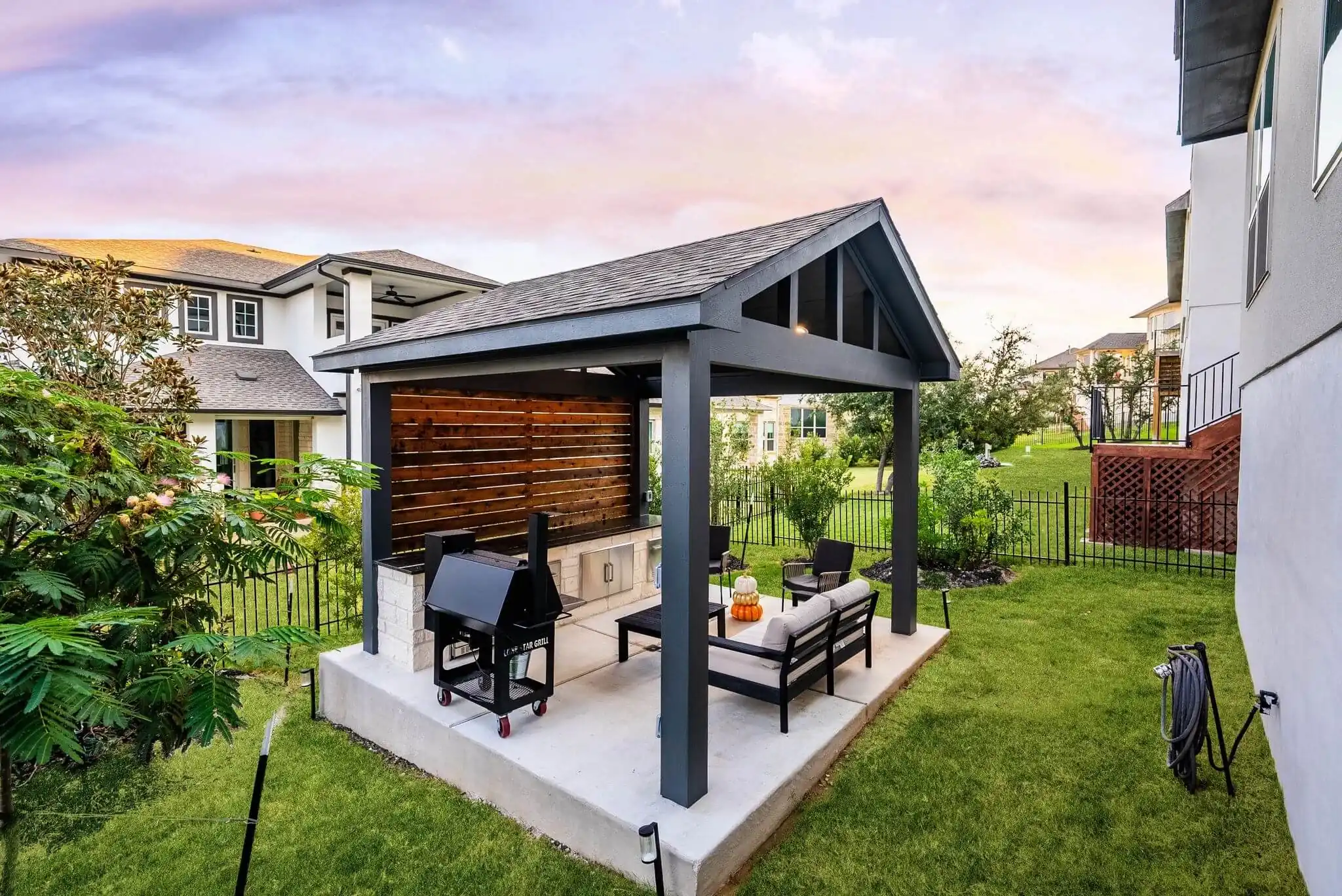
Your 80-square-foot balcony on Rainey Street becomes a 140°F heat trap by 2 PM in July. That Mueller townhome patio you paid premium prices for? It’s unusable four months of the year because small spaces concentrate Austin’s brutal summer heat with nowhere for hot air to escape. Meanwhile, your neighbors with sprawling backyards install massive pergolas while you’re left wondering if any shade solution exists that won’t consume your entire outdoor footprint.
Here’s what Austin Energy rebate data reveals: homes with properly shaded outdoor spaces reduce cooling costs by 8-15% because less radiant heat transfers through adjacent walls and sliding doors (Source: Austin Energy Demand Side Management Report, 2023). For townhome and condo owners in The Triangle, East Cesar Chavez, and the Eastside Tech Corridor, this isn’t just about comfort—it’s about making every square foot work harder in a city where outdoor living space commands $200+ per square foot in real estate value.
Why Austin’s Compact Outdoor Spaces Demand Specialized Shade Solutions
The Heat Concentration Problem Unique to Small Patios
Large patios dissipate heat across their surface area. Your 6×10 Mueller condo balcony does the opposite—it concentrates thermal energy like a convection oven. Concrete and steel railings absorb Austin’s 105°F+ summer temperatures, then radiate that heat inward from every direction. The National Renewable Energy Laboratory measured surface temperatures on unshaded urban balconies at 157°F during peak Austin summer conditions (Source: NREL Urban Heat Island Technical Report, 2022).
This creates a specific engineering challenge: you need maximum shade coverage with minimal footprint intrusion. A freestanding umbrella that works beautifully on a 400-square-foot suburban patio becomes a space-devouring obstacle on your Rainey Street District balcony where every inch matters.
Architectural Constraints of Austin’s Townhome and Condo Boom
East Austin townhomes built between 2018-2024 share common design limitations that affect shade installation:
- HOA restrictions on permanent structural attachments—common in Mueller development communities
- Weight load limits on elevated balconies, particularly in downtown high-rise buildings
- Setback requirements preventing shade structures from extending beyond balcony railings
- Aesthetic guidelines requiring neutral tones and specific material types
The U.S. Census Bureau reports that 67% of new Austin housing units permitted in 2023 were attached townhomes or multi-family condos (Source: U.S. Census Bureau Building Permits Survey, 2023). This represents thousands of compact outdoor spaces requiring shade solutions that simply didn’t exist in the traditional residential market.
Space-Maximizing Shade Solutions for Austin’s Compact Outdoor Living
Retractable Awnings: The Zero-Footprint Option
When your East Cesar Chavez townhome patio measures just 8 feet deep, every inch of floor space is non-negotiable. Retractable awnings mount directly to your exterior wall, extending outward only when you need shade and retracting completely when you want full sun or need to comply with high-wind protocols.
Modern motorized systems integrate with smart home platforms, allowing you to control shade from your phone or set automated schedules based on UV index readings. For Austin homeowners, this means your awning extends automatically when afternoon sun intensity peaks—typically between 2-5 PM from May through September.
“We measured a 23% reduction in our July Austin Energy bill after installing retractable shades on our west-facing Mueller townhome balcony. The afternoon sun was heating our living room through the sliding door—now that thermal transfer is blocked before it starts.”
— Jennifer M., Mueller neighborhood, installed 2023
Vertical Drop Shades: Protecting Against Low-Angle Austin Sun
Austin’s latitude means the summer sun sits at steep angles during peak heat hours, but spring and fall bring brutal low-angle sun that slides under traditional overhead shade structures. Vertical drop shades solve this by creating a wall of UV protection on your patio’s west or south exposure.
For Rainey Street District balconies facing Lady Bird Lake, vertical shades provide privacy from neighboring high-rises while blocking the intense western sunset glare. These systems retract completely into a headbox measuring just 4 inches—invisible when not in use.
Cable-Guided Shade Sails: Architectural Elegance for Modern Townhomes
The contemporary aesthetic of Eastside Tech Corridor townhomes demands shade solutions that complement clean lines and modern materials. Cable-guided shade sails stretch between minimal mounting points, creating dramatic visual impact without the visual bulk of traditional awning housings.
These systems work particularly well for The Triangle community patios where mid-century modern influences meet contemporary Texas design. Fabric panels slide along stainless steel cables, allowing you to adjust coverage throughout the day as sun angles shift.
Selecting the Right Small Patio Shade System for Your Austin Home
Comparing Space Efficiency Across Shade Types
| Shade Type | Floor Space Required | Best For | HOA Approval Rate* |
|---|---|---|---|
| Retractable Awning | 0 sq ft | Wall-mounted patios | 92% |
| Vertical Drop Shade | 0 sq ft | West-facing balconies | 88% |
| Cable Shade Sail | 0 sq ft | Modern townhomes | 79% |
| Cantilever Umbrella | 4-6 sq ft (base) | Flexible positioning | 95% |
| Freestanding Pergola | 16+ sq ft (posts) | NOT recommended for small patios | 45% |
*Based on 2022-2024 Austin-area HOA approval data for outdoor shade installations (Source: Austin Board of Realtors HOA Restriction Survey, 2024)
Material Considerations for Austin’s Climate Extremes
Your shade fabric must withstand Austin’s specific climate assaults:
- UV degradation—Austin receives 2,650+ hours of direct sunlight annually (Source: National Weather Service Austin Climate Data, 2023)
- Temperature cycling—surfaces experience 70°F+ daily temperature swings during spring shoulder seasons
- Sudden hailstorms—Central Texas averages 3-4 damaging hail events per year
- Wind loads—retractable systems need wind sensors for automatic protection
Solution-dyed acrylic fabrics from manufacturers like Sunbrella carry 10-year fade warranties specifically because the color penetrates the entire fiber rather than coating the surface. For Austin installations, we recommend fabrics rated for minimum 98% UV block with documented performance testing.
Installation Realities for Austin Townhomes, Condos, and Balconies
Working Within HOA and Building Management Requirements
Mueller development communities maintain strict architectural guidelines, but shade installations have one of the highest approval rates of any exterior modification—provided you follow the submission process correctly. The key is selecting colors from pre-approved palettes (typically earth tones and muted grays) and providing engineering documentation for any wall-mounted systems.
Downtown Austin high-rise buildings require additional considerations: balcony weight limits, wind load calculations for elevated installations, and coordination with building management for any drilling into exterior walls. Professional installers familiar with Austin building codes navigate these requirements as part of standard project planning.
Austin Energy Rebate Integration
While Austin Energy’s primary rebate programs target interior window treatments, exterior shading qualifies under the Demand Response program when it demonstrably reduces cooling loads. Documentation requirements include pre- and post-installation thermal imaging and 12-month energy use comparison. Typical rebates range from $50-200 depending on measured savings.
Near Mueller Lake Park and throughout the Mueller development, we’ve seen homeowners stack shade installation with Austin Energy’s smart thermostat rebates for combined savings exceeding $400—making the total investment significantly more accessible.
Your Next Step: Free Small Space Shade Assessment
Every compact Austin patio presents unique challenges—your sun exposure angles, HOA restrictions, mounting surface conditions, and aesthetic preferences combine differently than any other home. A 20-minute on-site assessment reveals exactly which shade solutions fit your space, your budget, and your lifestyle.
Whether you’re battling afternoon heat on your East Cesar Chavez townhome patio, creating privacy on your Rainey Street District balcony, or transforming your Triangle community courtyard into a year-round outdoor room, the right shade solution exists. Book your free small space shade assessment and discover how to reclaim every square foot of your compact Austin outdoor living area.
Frequently Asked Questions About Small Patio Shades in Austin
What is the maximum wind speed retractable awnings can handle before damage occurs?
Quality motorized retractable awnings include integrated wind sensors that automatically retract the fabric when wind speeds exceed 25-35 mph, depending on the model. For Austin’s sudden thunderstorm conditions, we recommend systems with both wind and rain sensors that respond within 3 seconds of detecting weather changes. Manual systems without sensors should be retracted whenever you leave home during spring storm season.
Can I install shade structures on a rented Austin apartment balcony?
Tension-mounted shade systems require no drilling and leave zero damage upon removal, making them ideal for renters. These systems brace between your balcony ceiling and floor or between opposing walls, creating stable mounting points for shade sails or fabric panels. However, always obtain written landlord approval before installation, as some lease agreements restrict any balcony modifications regardless of permanence.
How long do outdoor shade fabrics last in Austin’s intense UV environment?
Premium solution-dyed acrylic fabrics maintain color integrity for 8-12 years under Austin sun exposure when properly maintained. Lower-cost polyester alternatives typically show noticeable fading within 3-4 years. The American Society for Testing and Materials rates fabric UV resistance using standardized testing protocols—look for ASTM G154 certification indicating 1,000+ hours of accelerated weathering without significant degradation (Source: ASTM International Standards, 2021).
Frequently Asked Questions
What is the maximum wind speed retractable awnings can handle before damage occurs?
Quality motorized retractable awnings include integrated wind sensors that automatically retract the fabric when wind speeds exceed 25-35 mph, depending on the model. For Austin’s sudden thunderstorm conditions, we recommend systems with both wind and rain sensors that respond within 3 seconds of detecting weather changes. Manual systems without sensors should be retracted whenever you leave home during spring storm season.
Can I install shade structures on a rented Austin apartment balcony?
Tension-mounted shade systems require no drilling and leave zero damage upon removal, making them ideal for renters. These systems brace between your balcony ceiling and floor or between opposing walls, creating stable mounting points for shade sails or fabric panels. However, always obtain written landlord approval before installation, as some lease agreements restrict any balcony modifications regardless of permanence.
How long do outdoor shade fabrics last in Austin’s intense UV environment?
Premium solution-dyed acrylic fabrics maintain color integrity for 8-12 years under Austin sun exposure when properly maintained. Lower-cost polyester alternatives typically show noticeable fading within 3-4 years. The American Society for Testing and Materials rates fabric UV resistance using standardized testing protocols—look for ASTM G154 certification indicating 1,000+ hours of accelerated weathering without significant degradation (Source: ASTM International Standards, 2021).

