
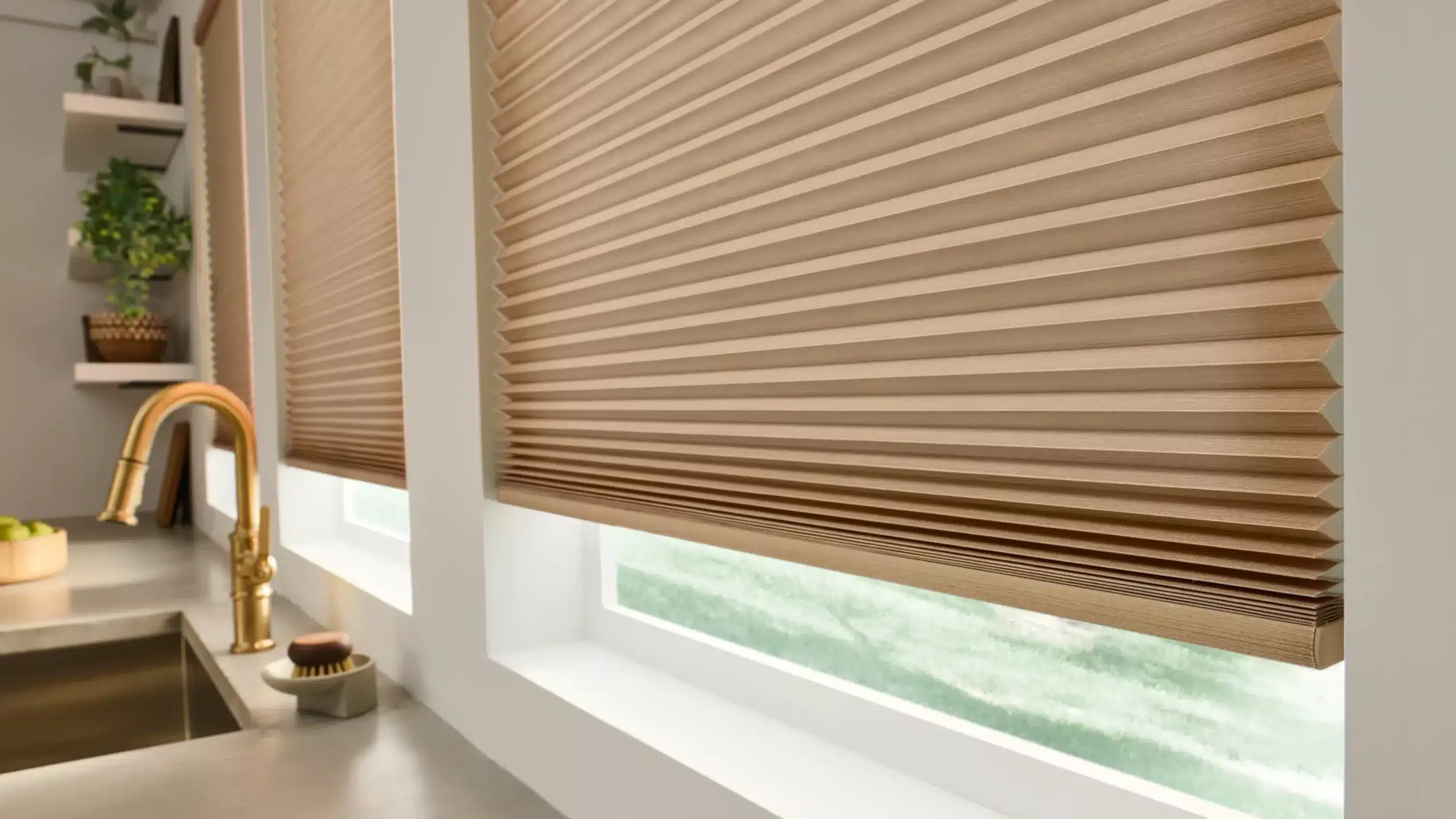
When your Austin Energy bill arrives after a July heatwave in Westlake Hills or Steiner Ranch, that three-digit total tells the real story: your windows are hemorrhaging cool air while Texas heat pours in. Standard blinds and curtains simply cannot compete with sustained 100°F+ temperatures that turn south-facing glass into radiators—which is exactly why honeycomb shades in Austin have become the go-to solution for homeowners serious about energy efficiency and refined aesthetics.
Unlike coastal Texas cities with humidity-driven cooling challenges, Austin’s Central Texas climate delivers dry, relentless heat that supercharges solar gain through windows. Homes in Circle C Ranch, Mueller, and throughout the metro face a unique thermal equation: expansive windows that define our modern ranch and contemporary architectural styles also create massive energy vulnerabilities. This guide breaks down exactly how cellular honeycomb shades solve this Austin-specific problem—and why your timing matters for maximizing Austin Energy incentives.
Why Austin’s Climate Demands Superior Window Insulation
The Central Texas Heat Challenge
Austin averages 116 days per year above 90°F, with summer peaks regularly exceeding 105°F (Source: National Weather Service Austin/San Antonio Office, 2023). This isn’t Houston humidity or Dallas wind—it’s sustained radiant heat that conventional window treatments cannot address. Single-pane windows common in 1970s-80s tract homes throughout Circle C Ranch and older neighborhoods can transfer up to 30% of your home’s cooling load directly through the glass (Source: U.S. Department of Energy, 2022).
Your AC unit works hardest between 2 PM and 7 PM when western exposures take direct sun—exactly when Austin Energy’s peak demand rates apply. Without proper insulation, you’re essentially paying premium rates to cool the outdoors.
How Honeycomb Cellular Structure Outperforms Traditional Blinds
Honeycomb shades create insulating air pockets within their cellular structure that trap heat before it enters your living space. Single-cell designs offer R-values around 2.0, while double-cell honeycomb shades achieve R-values up to 4.0—comparable to adding a quarter-inch of foam insulation to every window (Source: Hunter Douglas Energy Studies, 2023). Traditional aluminum blinds, by comparison, offer virtually zero insulation value.
For Austin’s modern ranch homes with expansive picture windows overlooking Barton Creek Greenbelt or Lady Bird Lake, this technology means preserving your views while blocking up to 80% of solar heat gain (Source: ENERGY STAR Window Attachments Guide, 2024).
Energy Savings: What Austin Homeowners Actually Experience
Quantified Cooling Cost Reductions
The U.S. Department of Energy confirms that properly installed cellular shades can reduce heat gain through windows by up to 80% during summer months, translating to whole-home cooling cost reductions of 15-25% (Source: U.S. Department of Energy, Energy Saver Program, 2023). For a typical 2,500-square-foot home in Steiner Ranch with $400 summer electric bills, that’s $60-$100 monthly back in your pocket.
“The impact is most dramatic on west-facing rooms that used to be unbearable after 4 PM. Properly sized honeycomb shades with side tracks create a complete thermal barrier that standard blinds simply cannot match—especially in Austin’s extreme summer conditions.”
| Window Treatment Type | Insulation R-Value | Solar Heat Reduction | Estimated Annual Savings (Austin) |
|---|---|---|---|
| Standard Aluminum Blinds | 0.1 | 15-20% | $50-$100 |
| Single-Cell Honeycomb | 2.0 | 45-55% | $200-$350 |
| Double-Cell Honeycomb | 3.5-4.0 | 70-80% | $400-$600 |
| Triple-Cell w/Side Tracks | 5.0+ | 80%+ | $500-$750 |
Austin Energy Rebate Opportunities
Austin Energy offers rebates for qualifying energy efficiency improvements through their Home Performance with ENERGY STAR program. While window treatment rebates vary by program year, homeowners who combine honeycomb shade installation with other efficiency upgrades often qualify for enhanced incentive packages. Contact Austin Energy directly to confirm current rebate availability—timing your installation with active rebate periods can reduce your net investment by 10-20%.
Selecting Honeycomb Shades for Austin Architectural Styles
Modern Ranch and Contemporary Homes
Austin’s contemporary builds—particularly throughout Mueller and newer Westlake Hills developments—feature floor-to-ceiling windows and open floor plans. For these homes, you need:
- Top-down/bottom-up operation for privacy control without sacrificing natural light
- Motorized controls integrated with smart home systems for automated sun-tracking
- Light-filtering fabrics in neutral tones that complement modern aesthetics while blocking heat
- Wide-span capability for picture windows exceeding 72 inches
1970s-80s Tract Home Upgrades
Older Austin homes throughout Circle C Ranch and similar established neighborhoods often have smaller, builder-grade aluminum-frame windows. These present different requirements:
- Inside-mount installations to maximize existing frame depth
- Blackout cellular options for bedrooms where older windows lack Low-E coatings
- Double-cell construction to compensate for single-pane glass
- Cordless or continuous-loop operation for child and pet safety
Premium Customization for Westlake Hills Luxury Properties
High-end Austin homes demand window treatments that match their caliber. Custom honeycomb installations for luxury properties include precision color-matching to interior palettes, motorization with whole-home integration (Lutron, Control4), and designer hardware finishes. Your window coverings should reflect the same attention to detail as your Lady Bird Lake waterfront views.
Installation Considerations Unique to Central Texas
Professional Measurement Matters
Austin’s housing stock varies dramatically. A home near The Domain built in 2020 has different window specifications than a 1978 ranch in South Austin. Professional measurement ensures:
- Precise fit that eliminates light gaps and air infiltration
- Proper mounting depth assessment for inside vs. outside mount decisions
- Identification of challenging windows (arched, angled, skylights) requiring custom solutions
- Whole-home consistency across different window sizes and styles
Texas Heat-Specific Installation Requirements
Standard installation practices from northern climates don’t account for Austin’s thermal stress. Quality installation includes side-channel tracks on south and west exposures to eliminate convection loops, UV-resistant mounting hardware that won’t degrade in intense sunlight, and verification that cellular shades hang properly under the expansion/contraction cycles our temperature swings create.
Schedule your free honeycomb shade consultation and energy assessment today—our measurement specialists understand Austin homes and will identify exactly which rooms offer the highest ROI for cellular shade installation.
Why Austin Homeowners Trust Professional Installation
Installing energy-efficient window coverings isn’t a weekend DIY project—especially when your goal is maximizing thermal performance in Austin’s demanding climate. Professional installation from a locally-established window treatment specialist means:
- 18+ years serving Austin neighborhoods from Mueller to Westlake Hills
- Manufacturer-certified technicians trained on proper cellular shade mounting
- Full warranty coverage that DIY installation voids
- Austin Energy program familiarity for rebate documentation
- Post-installation support for adjustments and maintenance
Your honeycomb shades represent a significant investment in your home’s comfort and efficiency. Protect that investment with installation that matches the quality of the product.
Take Control of Your Austin Energy Bills This Summer
Every month you wait costs you money. Whether you’re in a Steiner Ranch contemporary or a classic Circle C Ranch family home, honeycomb cellular shades deliver immediate, measurable relief from Austin’s brutal summers. With Austin Energy rebate programs currently active and summer temperatures already climbing, now is the optimal time to upgrade your window insulation.
Get your free in-home energy assessment and honeycomb shade consultation. We’ll measure your windows, calculate your potential savings, and provide a detailed proposal—with no obligation. Austin homeowners deserve window treatments engineered for Texas heat, not generic solutions designed for milder climates.
Frequently Asked Questions
How much can honeycomb shades reduce my Austin Energy summer bills?
Based on U.S. Department of Energy data, properly installed double-cell honeycomb shades reduce window heat gain by up to 80%, which translates to 15-25% lower cooling costs during Austin’s peak summer months. For a typical 2,500-square-foot home spending $400 monthly on summer electricity, expect savings between $60-$100 per month during June through September.
Do honeycomb shades work on oversized windows common in Mueller and Westlake Hills contemporary homes?
Yes, premium honeycomb shade manufacturers produce custom sizes exceeding 144 inches wide for the expansive picture windows typical in Austin’s contemporary architecture. These large-span installations require professional measurement and often incorporate motorized operation for practical daily use, as manually operating shades over 72 inches wide becomes cumbersome.
Are there Austin Energy rebates available for honeycomb shade installation?
Austin Energy periodically offers rebates through their Home Performance with ENERGY STAR program for qualifying energy efficiency improvements. Rebate availability and amounts change by program year, so contact Austin Energy directly before scheduling installation. Homeowners bundling honeycomb shades with other efficiency upgrades like attic insulation or HVAC improvements typically access larger incentive packages.
What is the difference between single-cell and double-cell honeycomb shades for Texas heat?
Single-cell honeycomb shades contain one row of air pockets and achieve R-values around 2.0, suitable for moderately hot climates or supplemental insulation on newer Low-E windows. Double-cell designs stack two rows of air pockets, reaching R-values up to 4.0—nearly doubling insulation performance. For Austin’s extreme 100°F+ summers, double-cell construction delivers noticeably better thermal control on south and west-facing windows.

